

What is Infrared Radiant Heat?
Introduction
Infrared radiant heat is a crucial concept in space heating, involving electromagnetic (e.m.) energy. Here’s a concise overview to help you make informed decisions about using high-intensity or low-intensity infrared radiant heaters.
Basics of Electromagnetic Energy
Electromagnetic energy from the sun includes ultraviolet (3%), visible light (50%), and infrared (47%). Infrared waves are responsible for heat energy on Earth. All physical bodies can absorb and emit e.m. energy, with temperature influencing the wavelength and frequency of the emitted energy.
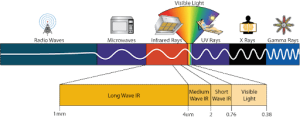
The above picture shows an Electromagnetic Grid, demonstrating where our products heat levels are maintained within it.
Infrared Radiant Heaters
- High-Intensity Heaters: Operate at 1600-1900°F, emitting energy in wavelengths from 1 to 6 microns. These heaters appear reddish due to their proximity to the visible light spectrum.
- Low-Intensity Heaters: Operate at 600-1100°F, emitting energy in wavelengths from 2 to 10 microns, which are farther from the visible spectrum and do not glow.
Key Considerations for Choosing Heaters
- Radiant Heating Efficiency: Higher radiant heating efficiency in high intensity heaters over low intensity heaters does not necessarily mean better space heating.
- Material Absorption: Different materials absorb e.m. energy differently. For instance, concrete and water (major components in space heating) have unique absorption properties.
- Thermal Efficiency: High intensity heaters have a thermal efficiency of 100% as all consumed energy remains in the space. Low-intensity heaters, if vented, have efficiencies ranging from mid-70s to high-80s.
- Ventilation/Exhaust: Building codes require fresh air ventilation for unvented high intensity heaters, impacting overall system efficiency.
Practical Application for Infrared Radiant Heat
High-intensity heaters act as spot sources of e.m. energy, while low-intensity heaters with proper reflectors can create a more uniform heat pattern. Effective infrared space heating design minimizes energy loss by avoiding heating high walls, which increases building heat loss.
In summary, understanding the physics of infrared heat and the specific needs of your space can guide you in selecting the most efficient and effective heating solution.
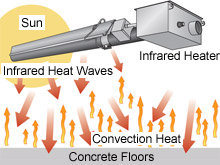
The above picture demonstrates how our infrared radiant technology works, providing heat by thermal radiation.
Conclusion
Infrared radiant heat is an efficient space heating method that warms objects and surfaces, not just the air. Choose between high or low-intensity heaters while considering heating efficiency, material absorption, and thermal output. Understanding infrared energy helps you make an informed decision for optimal comfort and energy use. Contact us for personalized advice to select the best infrared radiant heating system for your project.
Also feel free to check out Detroit Radiant Products for more information on our product!
Give us a call, email, or fill out our Project Details form so we can start working on a infrared radiant heat solution for your project!
Phone: (888) 501-0252
Email: sales@glradiant.com
Website: www.GLRadiant.com