
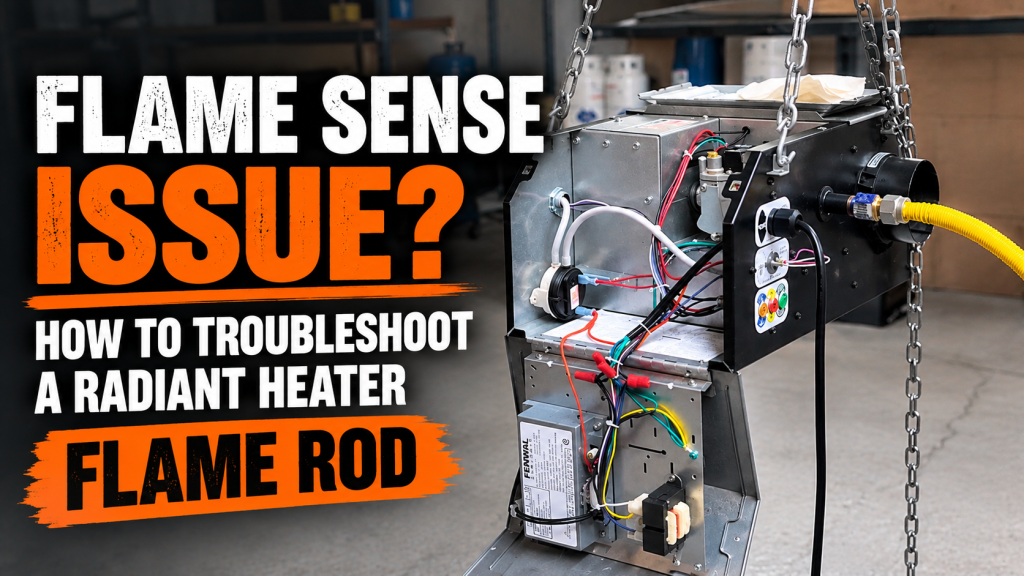
Flame Sense Issue? How to Troubleshoot a Radiant Heater Flame Rod
Introduction
If a low-intensity radiant tube heater lights and then drops out, or locks out on flame sense, the flame rod is one of the first components worth investigating. A dirty flame rod, a loose connection, damaged wiring, or insufficient gas pressure can all prevent the control from confirming a proper flame.
Before replacing parts, work through the basic flame rod checks. The process is straightforward, but it starts with safety and requires careful inspection of both the rod and its electrical connection.
What You’ll Learn
- Disconnect power and allow the heater to cool before accessing internal components.
- Clean the flame rod tip to remove buildup that can interfere with flame sensing.
- Verify manifold pressure to rule out inadequate gas supply as the underlying cause.
- Inspect the purple flame rod wire for damage, free movement, and a snug connection.
Start With Safe Heater Shutdown
Before opening the heater, disconnect it from electrical power and allow it to cool completely. Do not service a heater that is still hot to the touch.
Because this is gas-fired equipment, service should be completed by qualified personnel in accordance with the heater manufacturer’s instructions and all applicable local codes. Flame sensing problems can involve electrical, combustion, or gas-supply conditions, so a safe, systematic approach matters.
Access and Remove the Flame Rod
Once the heater is powered down and cool, remove the service access panel to reach the flame rod assembly.
The flame rod is connected by a purple wire. Carefully disconnect this wire from the rod, then remove the flame rod from the heater for inspection and cleaning. Avoid forcing the wire or connector, since a weak or damaged connection can create the same symptoms as a faulty flame sensor.
Clean the Flame Rod Tip
Flame rods work by sensing the presence of flame. Contamination on the sensing end can interfere with that signal, so cleaning the rod is an important first troubleshooting step.
Clean the end of the flame rod using one of the following:
- An emery cloth
- A dollar bill
The goal is to remove buildup from the sensing surface without damaging the rod. Once the tip is clean, reinstall it in its proper position.
Confirm the Heater Has Sufficient Gas Pressure
A flame rod issue is not always caused by the flame rod itself. If the heater is not receiving sufficient gas, it may light weakly, lose flame, or fail to maintain the conditions required for reliable flame sensing.
Check manifold pressure at the gas valve to verify that the heater is receiving the proper amount of gas. This measurement helps distinguish a flame sensing problem from a gas-supply or gas-valve issue.
Follow the heater manufacturer’s specifications for the required manifold pressure and the correct testing procedure. If gas pressure is outside the specified range, resolve that condition before condemning the flame rod.
Inspect the Purple Flame Rod Wire
The purple wire between the flame rod and the control is just as important as the rod itself. Inspect it closely for visible nicks, cuts, abrasion, or other damage.
Also make sure the wire can move freely through its conduit. A pinched, restricted, or damaged wire may have an intermittent connection, especially as the heater operates and components expand or vibrate.
Reconnect It Securely
When reconnecting the purple wire to the flame rod, make sure the connector fits snugly. A loose terminal can interrupt the flame-sensing signal and cause nuisance shutdowns or flame-sense lockouts.
A solid troubleshooting sequence looks like this:
- Disconnect power and let the heater cool.
- Remove the service access panel.
- Disconnect the purple wire and remove the flame rod.
- Clean the flame rod tip with emery cloth or a dollar bill.
- Check manifold pressure at the gas valve.
- Inspect the purple wire for free movement, damage, and a secure connection.
- Reassemble the heater and verify normal operation.
When a Flame Rod Check Helps
These inspections are especially useful when a radiant tube heater is lighting and dropping out, repeatedly locking out on flame sense, or showing signs of an unreliable flame-sensing circuit.
Cleaning the rod, verifying proper manifold pressure, and checking the purple wire can often identify the actual problem before unnecessary replacement parts are installed. Start with the basics, make every connection secure, and ensure the heater has the gas supply it needs to maintain a stable flame.
For additional guidance on radiant heating equipment and commercial or industrial radiant heating applications, visit Great Lakes Radiant.
Frequently Asked Questions
What causes a radiant heater to lock out on flame sense?
A dirty flame rod, damaged or loose flame-sensor wiring, or insufficient gas pressure can contribute to a flame-sense lockout.
What can I use to clean a flame rod?
An emery cloth or a dollar bill can be used to clean buildup from the end of the flame rod.
Why should manifold pressure be checked during flame rod troubleshooting?
Proper manifold pressure confirms that the heater is receiving enough gas. A gas-supply issue may create flame problems that resemble a failed flame rod.
What should I inspect on the flame rod wire?
Check that the purple wire moves freely through its conduit, has no nicks or damage, and fits snugly onto the flame rod when reconnected.
Need Help Troubleshooting a Radiant Tube Heater Flame Rod?
If your radiant tube heater lights and then drops out or locks out on flame sense, Great Lakes Radiant can help you troubleshoot the problem. From replacement flame rods and parts to technical support, we can help you find the right solution for your radiant heating system.
We provide radiant heating equipment, replacement parts, and technical support for contractors and heating professionals.
📞 (888) 501-0252
📧 sales@glradiant.com
🌐 www.glradiant.com