

Are Infrared Radiant Heaters Safe?
In the last blog we discussed various criteria to consider when designing a heater layout for a specific application. You can view the full blog here, but the following points recap what to look for when selecting the right heater for your application:
- Ceiling height and obstructions
- Room size and insulation
- Areas of air infiltration
- Air movement requirements
Are These Heaters Safe?
One of the questions we are most often asked, aside from what heater is right for my needs, is “How safe are these units?” Whenever you’re handling a live flame powered by a gas line there can be concerns regarding the safety of the individuals and materials inside of the space. Our products must meet strict safety guidelines and various code regulations established by the leading authorities on this matter.
Clearances to Combustibles
 The first safety measure in place for gas-fired infrared heaters is the clearences to combustibles. These clearences form a box around the heater using the required minimum distances that combustibles can be placed from the heater to prevent fire hazards. Combustible items may include wood, paper, chemicals, plastic, parked vehicles, and storage racks as a few examples. You’ll also want to recognize overhead items like sprinkler heads, roll up doors, vehicle lifts, hoses, cranes, partitions, and hoists. This is covered by the Standard for Gas-Fired Low-Intensity Infrared Heaters (ANSI Z83.20/CSA 2.34) as well as the National Fuel Gas Code (ANSI Z223.1/NFPA 54).
Gas Connection
Another important safety topic is ensuring there is a proper gas connections when the unit is installed. Whether the system you’re using is fueled by natural or propane gas, you’ll want to adhere to this safety precaution. When connecting an infrared heater to the supply line allowances for heater expansion are required. A flexible gas connector of approved type must be used. This gas connector is already included in our Detroit Radiant Products Re-Verber-Ray brand gas-fired low-intensity infrared tube heaters, however for the gas-fired high-intensity DR Series it is sold separately. This safety standard is also covered by the Natural Fuel Gas Code (ANSI Z223.1/NFPA 54).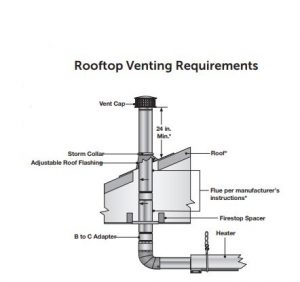
Venting
Two venting options include rooftop and sidewall. There are several things to contemplate when venting. First, you’ll want to provide proper fire guarding when venting through a combustible wall. Next, ensure venting is free and clear of flammable objects, obstructions, and debris. A common venting issue can occur because of nature getting in the way; ensure the vent cap is properly placed to prevent this from happening.
When using air intake, fresh air for combustion must be provided from outside the space if the unit is operating in a harsh environment. Establish adequate separation from the heater exhaust to the air intake so exhaust gasses are not flowing back into the burner. Venting is made easy with the rooftop and sidewall vent kits Great Lakes Radiant & Industrials regularly keeps in stock. Ask for the applicable kit to be added as an accessory to your heater.
Conclusion
Read the instructions! All the above information is included in the installation and operation manual. Many of the parts we sell also come with leaflets of information for correct installation and service.
These safety precautions are not as complicated as you may have previously thought, especially becauase we carry everything you need to correctly install the heater. From parts to accessories, Great Lakes Radiant & Industrials has it covered! Rest assured knowing that we also provide factory direct technical support for any question that may arise during installation or use of one of our systems.
For more in depth safety information visit the Infrared Heater Safety Council’s website.