
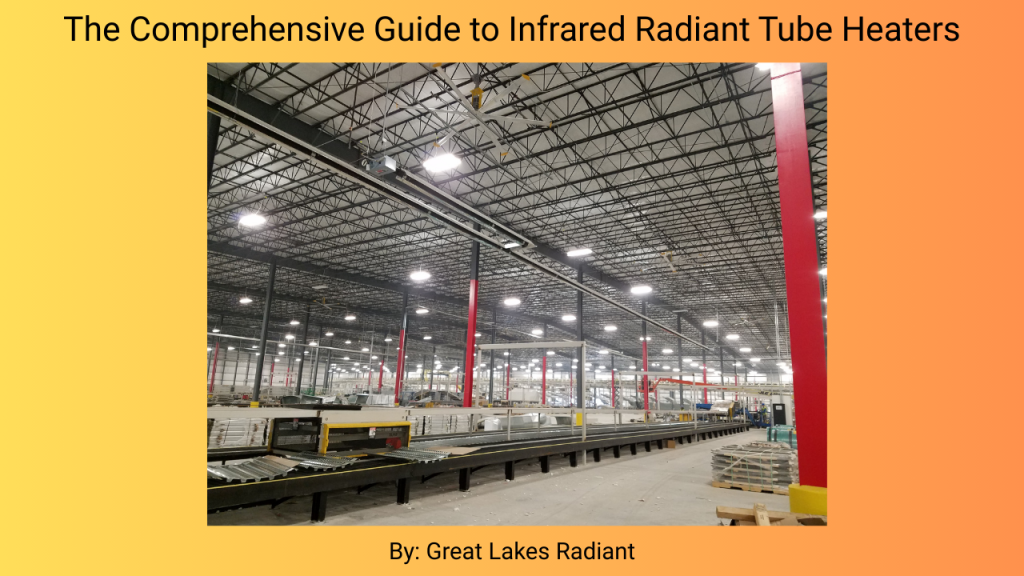
The Comprehensive Guide to Infrared Radiant Tube Heaters
Introduction
Infrared radiant tube heaters have revolutionized heating in commercial and industrial spaces. Unlike traditional forced-air systems, infrared heaters provide a more efficient and targeted approach to heating. This method offers significant fuel savings and enhanced comfort levels. This blog delves into the operational principles, benefits, and technical insights of infrared radiant tube heaters, drawing on various technical reports, white papers, and independent studies.
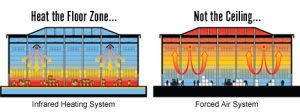
Caption: How the magic of Infrared Heating works!
The Basics of Infrared Heating
Infrared heating operates on the principle of radiant energy, which is part of the electromagnetic spectrum. This energy transfers directly from the heater to the objects and people in its path, much like the sun’s rays. This method of heat transfer is highly efficient because it does not rely on heating the air, which can be a significant source of heat loss in traditional systems.
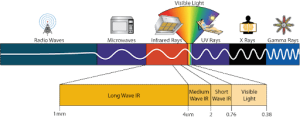
Caption: The Electromagnetic Spectrum demonstrated.
Infrared heaters can be categorized into high-intensity and low-intensity heaters. High-intensity heaters, such as those in the DR, DSC, PT, and BAH series by Detroit Radiant, suit buildings with high ceilings like aircraft hangars and warehouses. These heaters require greater clearance to combustibles and are typically unvented, needing adequate combustion air.
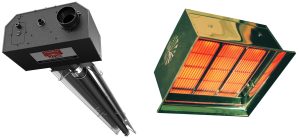
Caption: Pictured on the left is a Low-intensity heater, while the right is a High-Intensity.
Clearance to Combustibles and Designing for Safety
Installation, Maintenance and the Importance of Clearances
Proper installation and maintenance are crucial for the optimal performance and safety of infrared heaters. Follow the manufacturer’s Installation, Operation, and Maintenance manual carefully. Key maintenance tasks include ensuring clearances to combustibles, checking gas connections for leaks, and cleaning the combustion chamber and burner observation windows.
When installing infrared radiant tube heaters, one of the critical safety factors to consider is the clearance to combustibles, as mentioned above. Clearance to combustibles is defined as the minimum distance that must be maintained between the heater and any combustible material. This ensures that the high temperatures generated by the heater do not ignite nearby materials, which could lead to fire hazards.
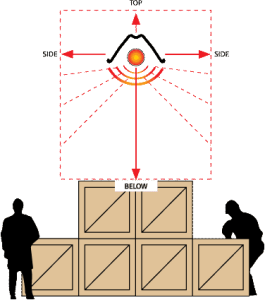
Defining Clearances
Clearances to combustibles vary depending on the model and installation configuration of the heater. These clearances are specified in the heater’s Installation, Operation, and Maintenance manual and must be strictly adhered to. The general categories to maintain clearances from include:
- Combustible Items:
- Wood
- Paper
- Fabric
- Chemicals
- Paint
- Plastics
- Moving Objects:
- Overhead doors
- Vehicles on lifts
- Cranes
- Hoists
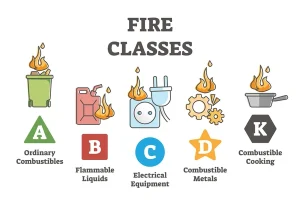
Caption: It’s always better to be safe than sorry. Make sure to be checking your clearances!
Evaluating the Installation Site
Before installing the heating system, the building must be evaluated for potential hazards. This includes identifying areas with:
- Gas and electrical lines
- Combustible and explosive materials
- Chemical storage areas
- High concentrations of chemical fumes
- Vehicle parking areas
- Storage areas with stacked materials
- Lights and sprinkler heads
- Overhead doors and tracks
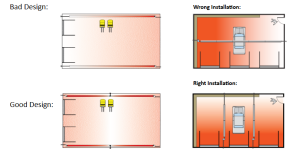
Caption: An example of a design with Infrared Radiant Tube Heaters. As shown, you never want to place them directly overhead a vehicle as it will absorb the heat.
Designing for Safety
When designing the layout for infrared heaters, it is essential to consider the following:
- Adequate Clearances: Ensure that the specified clearances to combustibles are maintained. This may involve posting signs to specify the maximum permissible stacking height in storage areas.
- Accessibility: Provisions must be made to ensure accessibility to the heater for maintenance purposes. This includes considering the placement of suspended heaters to avoid damage by aircraft, cranes, movable scaffolding, or other objects.
- Ventilation: Adequate combustion and ventilating air supply must be provided to ensure safe operation of the heaters. This is particularly important for unvented heaters that require adequate combustion air.
- Building Materials: Ensure that adjacent materials with low heat tolerance (such as plastics, vinyl siding, canvas, etc.) are protected from degradation due to the heat generated by the heaters.
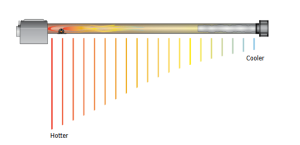
Caption: The further away from the burner, the less heat is emitted out. This is important when in the designing phase as well!
Safety Warnings
- Explosive Objects: Placement of explosive objects, flammable objects, liquids, and vapors close to the heater may result in explosion, fire, property damage, serious injury, or death. Do not store or use explosive objects, liquids, or vapors in the vicinity of the heater.
- High Surface Temperatures: Children and adults should be alerted to the hazards of high surface temperatures and should stay away to avoid burns or clothing ignition. Young children should be carefully supervised when they are in the same space as the heater.
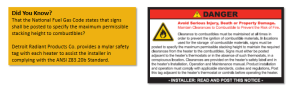
By carefully considering these factors and adhering to the specified clearances, infrared radiant tube heaters can be installed safely and effectively, providing efficient and targeted heating for commercial and industrial spaces.
Technical Reports, White Papers and Insights from Independent Studies
Two-Stage Infrared Heating Systems
One significant advancement in infrared heating technology is the development of two-stage systems. These systems, such as the RE-VERBER-RAY Two-Stage HL Series introduced in 1993, offer the flexibility of operating in either a high-fire or low-fire mode. This flexibility is crucial because ASHRAE weather records indicate that 90% of degree hours in the USA can be satisfied by operations in the low-fire mode, with only 10% requiring high-fire mode.
RDM Engineering conducted a detailed study in 1993 that documented the benefits of the HL Series. The patented design, featuring a calculated input differential of 30%, allows the heater to adjust to environmental conditions. This adjustment provides the most comfortable and economical infrared heat available. The test facility, with a documented heat loss of 200,000 BTU/H, demonstrated that the building could be comfortably heated during moderately cold days while still meeting heating capacity on the coldest winter days.
The two-stage technology allows for a more nuanced approach to heating, adjusting the output based on the specific needs of the environment. This not only enhances comfort but also optimizes energy usage, leading to further cost savings.

Evaluation of Two-Stage Systems
The technical report “Evaluation of Two-Stage Systems” provides an in-depth analysis of the performance of two-stage infrared heating systems. The report highlights the advantages of these systems in terms of fuel savings, comfort, and reduced equipment cycling. It also presents case studies that demonstrate the real-world benefits of two-stage heating systems in various industrial applications.
Engineering Systems – Specifying Radiant Heat
The white paper titled “Specifying Radiant Heat” from Engineering Systems provides a comprehensive overview of the considerations involved in specifying radiant heat for industrial applications. It emphasizes the importance of understanding the unique heating requirements of a space and selecting the appropriate type of infrared heater. The paper also discusses the benefits of radiant heating in terms of energy efficiency and comfort.

Evaluation of Infrared vs. Forced Air Heating
A three-year study by ASHRAE (Technical Paper Number 4643) compared the effectiveness of a two-stage infrared heating system to a forced-air heating system in a commercial facility with frequent overhead door openings. The study revealed that infrared heaters provided 23% fuel savings and improved comfort levels over forced-air systems. The evaluation method included measuring temperatures at various locations and gas usage, with predetermined operating cycles for both systems.
The study highlighted several key advantages of infrared heating over forced-air systems:
- Direct Heating: Infrared heaters warm objects and people directly, rather than heating the air. This leads to a more even distribution of heat and reduces energy waste.
- Reduced Heat Loss: Since infrared heaters do not rely on air circulation, there is less heat loss through openings such as doors and windows.
- Improved Air Quality: Forced-air systems can circulate dust and allergens, while infrared heaters do not disturb the air, leading to better indoor air quality.
Caption: The difference between Infrared Heating & Forced Air!
Understanding AHRI Standard 1330 and Radiant Efficiency
The Infrared Industry has long sought an accurate metric for measuring radiant efficiency. The recognized standard in North America is CAN/ANSI/AHRI 1330, which provides guidelines for test equipment specifications and proper methods of testing. This standard aims to develop a rating system by which the radiant efficiency of comparative infrared heaters can be measured against one another, similar to SEER ratings for air conditioning units.
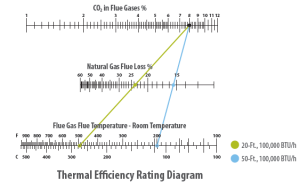
Caption: Here is the Thermal Efficiency Rating Diagram used for testing thermal efficiency of an appliance.
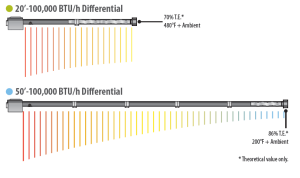
Caption: And here is that Rating Diagram put into practical use, comparing the 20ft and 50ft units against one another and their differentials.
Radiant efficiency measures how much thermal energy converts into radiant heat energy. This form of thermal transfer is fundamentally different from conduction or convection, as it does not require an intermediary heat transfer device. According to AHRI Standard 1330, manufacturers must report radiant efficiency values along with other criteria such as model number, heat input, and length of the heat exchanger tube.
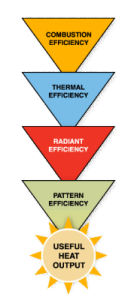
Caption: The different efficiencies that allow Radiant Heat to be as effective as it is!
The standard ensures that consumers and engineers can make informed decisions based on reliable and comparable data. It also encourages manufacturers to innovate and improve the efficiency of their products.
Benefits of Infrared Heating
Fuel Savings
One of the most compelling benefits of infrared heating is its potential for significant fuel savings. Studies have shown that gas-fired infrared heaters can save up to 50% in fuel costs compared to traditional forced-air systems. The properties of radiant heat transfer allow for the thermostat in an area heated by infrared to be set 5–10°F lower than hot air systems. This results in lower fuel costs while maintaining comfortable temperatures at ground level.
Two-stage technology can further reduce energy costs by an additional 12% and offers benefits such as faster heat loss recovery, improved comfort, and a significant reduction in equipment cycles. The Braneida Study of 1993 documented a 12% fuel savings and a 35% cycle reduction over single-stage heaters.
Environmental Impact and Sustainability
Infrared heating systems are not only cost-effective but also environmentally friendly. By reducing fuel consumption, these systems help lower greenhouse gas emissions. The direct heating method of infrared heaters ensures that energy is used efficiently, minimizing waste. Additionally, many infrared heaters are designed with sustainability in mind, using recyclable materials and energy-efficient components.
Infrared heaters also contribute to better indoor air quality. Traditional forced-air systems can circulate dust, allergens, and other pollutants, which can negatively impact health. Infrared heaters, on the other hand, do not rely on air circulation, reducing the spread of airborne contaminants.
Flexibility and Comfort
Infrared heaters offer maximum flexibility in placement and can be configured to meet the specific heating requirements of a space. They are typically controlled by a thermostat and can be installed either vented or unvented. The ability to bring in outside air for combustion, if necessary, adds to their versatility.
Infrared heaters warm people and objects directly, rather than the air, creating a more comfortable environment. This is particularly advantageous in spaces with high air infiltration, such as warehouses and loading docks.
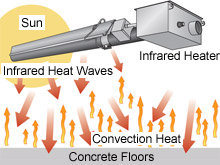
Caption: An example of how Infrared Radiant Heaters work, just like the sun!
Case Studies and Real-World Applications
Industrial Warehouses
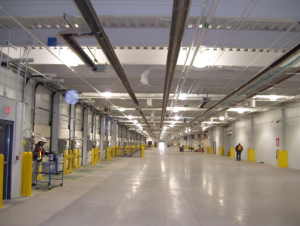
Industrial warehouses often face significant heating challenges due to their large open spaces and frequent door openings. Infrared radiant tube heaters have proven to be particularly effective in such environments. A case study in a large warehouse in Detroit showed that infrared heaters reduced fuel consumption by 30% compared to the previous forced-air system. The warehouse also reported improved comfort levels for employees, who no longer experienced the drafts and uneven heating associated with forced-air systems.
Aircraft Hangars
Aircraft hangars require efficient heating solutions that can handle large volumes and high ceilings. Infrared heaters are ideal for these applications because they provide direct heating to the aircraft and work areas without wasting energy on heating the air. A study at an aircraft hangar in Colorado demonstrated that infrared heaters reduced heating costs by 40% and significantly improved the working conditions for maintenance crews.

Sports Facilities
Sports facilities, such as indoor tennis courts and gymnasiums, benefit from the targeted heating provided by infrared heaters. These facilities often have high ceilings and large open spaces, making traditional heating methods inefficient. Infrared heaters ensure that the playing surfaces and seating areas are kept at comfortable temperatures without the need for excessive energy consumption. A case study at an indoor tennis facility in New York showed a 25% reduction in energy costs and improved player comfort after the installation of infrared heaters.

Agricultural Applications
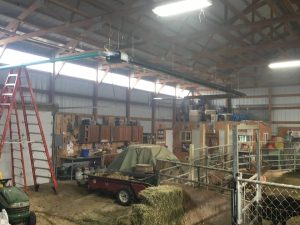
Infrared heaters are also highly effective in agricultural settings, such as greenhouses and livestock barns. In greenhouses, infrared heaters provide the necessary warmth for plants without causing excessive humidity, which can lead to mold and mildew. For livestock barns, infrared heaters ensure that animals are kept at a comfortable temperature, promoting better health and productivity. Studies have shown that infrared heating can improve growth rates and reduce energy costs in agricultural applications.
Future Trends in Infrared Heating
The future of infrared heating looks promising, with ongoing advancements in technology and increasing awareness of the benefits of radiant heating. Innovations such as smart thermostats and advanced control systems are making infrared heaters even more efficient and user-friendly. These technologies allow for precise temperature control and energy management, further enhancing the cost savings and comfort provided by infrared heating systems.
Research and development efforts are also focused on improving the materials and design of infrared heaters. Advances in reflector technology, for example, are increasing the efficiency and effectiveness of these systems. Additionally, new materials that can withstand higher temperatures and provide better heat distribution are being explored.

Caption: The future of Infrared Heating is bright and warm, just like the above picture!
Conclusion
Infrared radiant tube heaters represent a highly efficient and effective solution for heating commercial and industrial spaces. The technology’s ability to provide targeted heating, coupled with significant fuel savings and enhanced comfort levels, makes it a superior choice over traditional forced-air systems. Independent studies and technical reports have consistently demonstrated the benefits of infrared heating, solidifying its place as a leading technology in the HVAC industry.
Give us a call, email, or fill out our Project Details form so we can start working on a radiant heat solution for your project!
Phone: (888) 501-0252
Email: sales@glradiant.com
Website: www.GLRadiant.com
Also feel free to check out Detroit Radiant Products for more information on our product!

Works Cited
- ASHRAE. “Technical Paper Number 4643.” Evaluation of Infrared vs. Forced Air Heating, 1993.
- RDM Engineering. “Evaluation of Two-Stage Systems.” 1993.
- Engineering Systems. “Specifying Radiant Heat.” 1994.
- CAN/ANSI/AHRI 1330. Standard for Radiant Efficiency Measurement.
- Braneida Study. “Fuel Savings and Cycle Reduction in Two-Stage Heaters.” 1993.