
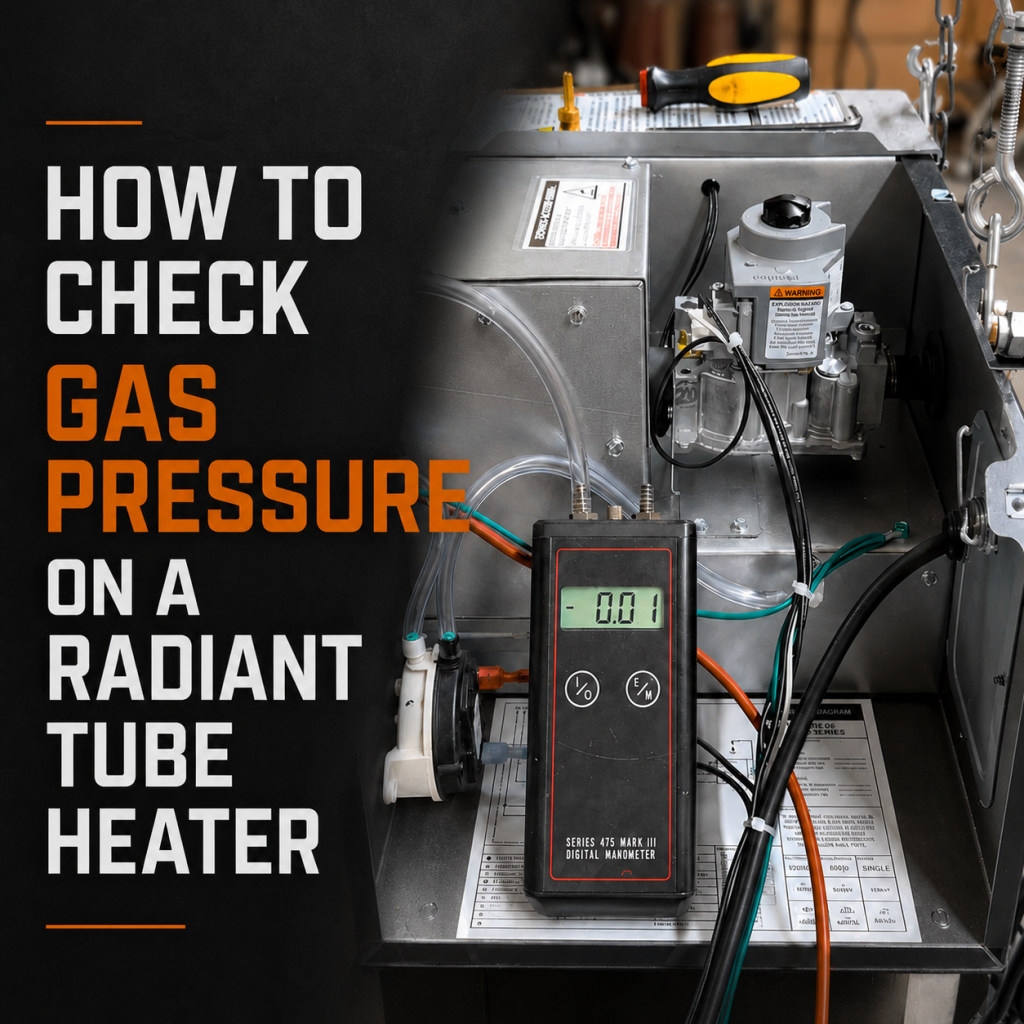
How to Check Gas Pressure on a Radiant Tube Heater
Introduction
Before starting up a radiant tube heater, one of the most important checks is gas pressure. If the inlet pressure or manifold pressure is off, the heater may not operate the way it should. That can lead to poor performance, ignition problems, and unnecessary troubleshooting later.
This walkthrough covers how to check inlet gas pressure and manifold gas pressure on a radiant tube heater, including the correct readings for both natural gas and propane.
Tools You Need
To check gas pressure on a heater, keep the setup simple. You will need:
- Manometer
- Brass barb fitting
- Flathead screwdriver
- 3/16 inch Allen wrench
A digital manometer works well here, but an analog manometer can also be used. The key is making sure it is connected securely and giving you a stable reading while the heater is operating.
Why Checking Gas Pressure Matters
Proper startup procedures matter on any gas-fired radiant tube heater. Verifying pressure before regular operation helps confirm that the gas supply and valve settings are where they need to be.
There are two readings to pay attention to:
- Inlet pressure, which tells you what gas pressure is being supplied to the heater
- Manifold pressure, which tells you what pressure is being delivered through the valve to the burner
If either one is incorrect, the heater may still try to run, but it will not be running as intended.
How to Check Inlet Gas Pressure
Start Safely
Before connecting anything, make sure the heater is powered off and the gas is disconnected. If a gas cock is installed at the end of the heater, switch that valve to the off position first.
Connect to the Inlet Test Port
Use the 3/16 inch Allen key to remove the inlet cap from the gas valve.
Once the cap is removed:
- Install the brass barb fitting into the inlet port
- Slide the tubing from the manometer over the barb fitting
Make sure the tubing is seated snugly so you do not lose pressure or get an inaccurate reading.
Restore Power and Gas
With the manometer connected, you can:
- Reconnect power to the heater
- Open the gas valve
- Turn on the breaker
You want to read inlet gas pressure while the heater is operating, not just sitting idle. Once the heater ignites, check the pressure on the manometer.
Correct Inlet Pressure Readings
For a natural gas heater, the expected inlet pressure is:
- 5 to 14 inches of water column
For a propane heater, the expected inlet pressure is:
- 11 to 14 inches of water column
A sample natural gas reading of about 5.4 to 5.5 inches of water column is right where it should be and indicates a good operating supply pressure.
How to Check Manifold Gas Pressure
Shut Everything Down First
Just like with the inlet test, begin by making sure the heater is disconnected from both power and gas.
Access the Manifold Pressure Tap
Use the Allen key again to remove the cap from the manifold pressure tap.
Then:
- Insert the barb fitting into the tap
- Connect the tubing from the manometer to the barb
A helpful trick here is to use a short scrap piece of tubing on the barb fitting while threading it in. That gives you a little extra grip and makes it easier to screw the fitting in until snug.
Run the Heater and Take the Reading
Once the manometer is connected:
- Reconnect power
- Open the gas valves
- Turn on the breaker
After ignition, read the manifold pressure while the heater is running.
Correct Manifold Pressure Readings
For a standard natural gas heater, the manifold pressure should be:
- 3.5 inches of water column
- Plus or minus 0.2 inch
For a propane heater, the manifold pressure should be:
- 10 inches of water column
If the reading is sitting right around 3.5 inches of water column on a natural gas unit, that is exactly where you want it.
How to Adjust Manifold Pressure
If your manifold pressure is not at the correct setting, you can adjust it directly at the valve.
Here is how:
- Use a flathead screwdriver to remove the adjustment cap
- Insert the screwdriver into the adjustment screw
- Turn clockwise to increase pressure
- Turn counterclockwise to decrease pressure
Make small adjustments. A slight turn can make a noticeable difference. After a minor clockwise adjustment, the pressure should come back up to the target reading if it was low.
Common Pressure Issues to Watch For
When checking a radiant tube heater during startup, a few issues are worth keeping in mind:
- Low inlet pressure can point to a gas supply issue upstream of the heater
- Incorrect manifold pressure may mean the gas valve needs adjustment
- Testing while the heater is off can give a misleading picture of actual operating pressure
- Loose tubing or fittings can affect the manometer reading
That is why it is important to check pressures during operation and to confirm your connections are secure before trusting the numbers.
Quick Reference Pressure Chart
- Natural gas inlet pressure: 5 to 14 inches water column
- Propane inlet pressure: 11 to 14 inches water column
- Natural gas manifold pressure: 3.5 inches water column, plus or minus 0.2 inch
- Propane manifold pressure: 10 inches water column
Final Check
Checking gas pressure on a radiant tube heater is not something to skip. It is a basic startup step that tells you whether the heater is getting the right supply pressure and delivering the correct manifold pressure to the burner.
With a manometer, a barb fitting, and a couple of hand tools, you can verify both readings quickly and make a simple manifold adjustment if needed. Done properly, this helps ensure the heater is set up to operate correctly from the start.
Need Help Starting Up or Troubleshooting a Radiant Tube Heater?
If you’re checking inlet gas pressure, manifold pressure, ignition issues, or overall heater performance, the right startup procedure matters.
At Great Lakes Radiant, we help walk through real-world radiant tube heater installations and troubleshooting every day. From verifying gas pressure readings to reviewing fuel type, valve settings, burner operation, venting, clearances, and system layout, we’ll help you make sure the heater is operating the way it should.
Whether you’re starting up a new Re-Verber-Ray system, adjusting manifold pressure, diagnosing a poor ignition issue, or double-checking your readings with a manometer, we’ll help you get it right the first time.
Send us photos, heater model information, gas pressure readings, construction documents, or fill out our Project Details form, we’re here to help.
📞 (888) 501-0252
📧 sales@glradiant.com
🌐 www.glradiant.com